Showing posts with label Nurcholish Madjid. Show all posts

Saturday, 26 April 2014

Dr Budhy Munawar-Rachman: Defender of Religious Pluralism in Indonesia

Dr Budhy Munawar-Rachman
Budhy Munawar-Rachman, a leading figure in what I call Indonesia's third generation of postcolonial Muslim intellectuals, has received was doctorate by the Driyarkara School of Philosophy, on the basis of a thesis entitled Titik Temu Agama-agama: Analisis atas Islam Inklusif Nurcholish Madjid (Points of Agreement between Religions: An Analysis of Nurcholish Madjid's Inclusive Islam).

For many years, Budhy was a close confidante of Nurcholish Madjid (1939-2005, affectionately known as 'Cak Nur'), one of the most important Muslim intellectuals during Suharto's New Order (1965-1998) and founder of the Movement for the Renewal of Islamic Thinking. As the founder of the Nurcholish Madjid Society, former executive director of the Paramadina Foundation and editor of many of Cak Nur's books, he is the prime custodian of the latter's intellectual heritage. Thus Budhy was uniquely positioned to write this dissertation on his mentor's views of interfaith relations and interreligious dialogue.

Budhy Munawar-Rachman's own views on the subject are shaped by a lengthy and meandering intellectual trajectory. The sketch below is taken from one of the chapters in my upcoming book Islam in Indonesia: The Contest for Society, Ideas and Values:

Although regarded as an exponent of progressive Muslim thinking, Budhy Munawar-Rachman earlier education firmly integrated him  into the mainstream of Sunni orthodoxy, where ‘fiqh became the science that underpinned social reality’. His interest in physics kindled a desire for finding a rationalized understanding of religion, changing fixed religious convictions and received rituals into an intellectual and spiritual quest, which he expanded further through readings into popular psychology and the writings of Krishnamurti. However, Munawar-Rachman‘s key educational experience was the time he spent at the Higher School for Entrepreneurship (Sekolah Tinggi Wiraswasta, STW). This unconventional adult education institute by Utomo Danajaya, who later joined Nurcholish Madjid in establishing the Paramadina Foundation, teaches through participatory training and does not offer any formal degrees or qualifications. This approach is based on Paulo Freire’s philosophy of education, called the ‘Pedagogy of the Oppressed’, and geared towards grassroots level social development and empowerment.

In this milieu he was also introduced to the world of Islamic theology and philosophy, becoming captivated by the writings of Harun Nasution and especially his advocacy of a rehabilitation of the Mu‘tazila. Another deep impression was left by the publication of the diaries of AhmadWahib (1942-1973), Mukti Ali’s protégé in Yogyakarta who had died in a traffic accident. This influences ‘turned him into a free thinker, who had the courage to think for himself without fear of error’. Thus Munawar-Rachman was drawn into a study circle run by Ahmad Wahib’s close friend Djohan Effendi, where he learned to understand that the Qur’an must be seen as a phenomenon ‘reflecting the structures of that society, culture, economy and government, its foreign relations, customs, climate, the personality of the Prophet and his Companions’. Here he was also introduced to Nurcholish Madjid’s ideas on secularity and learned to appreciate the distinction between secularism as an ideology and secularization as a social process, captured in a new anthropology which made humankind God’s vicegerent on earth.

After a few years as a social research, during which he undertook a project investigating religious motivation where he tried to use the categories of Muʽtazili philosophy learned from Nasution for determining the level of rationality in pre-urban societies on the outskirts of Jakarta, Munawar-Rachman joined STF Driyarkara, which was equally unconventional as STW and used a  teaching philosophy called ‘conscientizing research’ also modelled after the work of Freire. It stimulated Munawar-Rachman to engage seriously with the work of Marx, Wittgenstein and Popper, as well as other academic fields such as economics and the sociology of development and education. These studies provided him with a more solid philosophical underpinning for rethinking theologies, such as the one formulated by the Mu‘tazila, as functional-rational approaches to modernity and transform them into an ideology for social change -- a Liberation Theology shaped by a new paradigm standing in stark contrast to the privatization of religion found in conventional liberal theology.


All this forms the foundation for Budhy Munawar-Rachman’s later involvement in defending religious pluralism – especially in the wake of the controversial fatwa by Indonesia’s Council of Islamic Religious Scholars (MUI) – culminating in a hefty study entitled Reorientation of the Renewal of Islam: Secularism, Liberalism and Pluralism, A New Paradigm for Indonesian Islam.

Saturday, 20 April 2013

An intellectual History of the Contemporary Muslim World

An impressionist and anecdotal talk by yours truly about contemporary thinking in the Muslim World at Mahfil Ali Shi'a Ithna'ashari Community in Middlesex (SICM).

Tuesday, 22 January 2013

Critical Muslims: Cosmopolitans or Heretics?

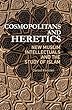
I have managed to track down lengthy videos of two of the protagonists featured in Cosmopolitans and Heretics: the Egyptian philosopher Hasan Hanafi and the late Algerian-French historian of Islam Mohammed Arkoun. Unfortunately, there does not seem to exist a comparable audiovisual impression of the third intellectual featured in the book, Nurcholish Madjid. Instead, I have included a recording of the fifth Nurcholish Madjid Memorial Lecture, entitled 'Marx or Machiavelli: Towards quality Democracy in Indonesia and America' of 2011, delivered by the American political scientist and Indonesianist, R. William Liddle. The lecture was organized by the Center for the Study of Religion and Democracy (PUSAD) of the Paramadina Foundation in Jakarta, and hosted by Paramadina University.


Documentary on Hasan Hanafi
 
Former presidential adviser and head of the European Bank for Reconstruction and Development, Jacques Attali, talks to Mohammed Arkoun.

 Nurcholish Madjid Memorial Lecture by R. William Liddle

For further readings on these three Muslim thinkers, check out the recommendations below:

Sunday, 6 January 2013

Indonesian Muslim Intellectuals and Democratization: An Insider Perspective

Regular followers of this blog will have noticed the author harping on and on about the importance of paying more attention to developments in Indonesia when it comes to assessing possible future trajectories for the Muslim world at large in terms of democratic change and the role of educated middle classes in this process. Too often only Turkey is held up as the example to follow, but ignoring Indonesia means missing some very important lessons (see earlier posts on 11 December 2011 and 5 February 2011).

I am therefore very pleased to see my friend Luthfi Assyaukanie, a political scientist associated with the Paramadina University and the Freedom Institute in Jakarta, and also a founding member of Indonesia's Liberal Islam Network, addressing exactly these points in an essay on Indonesia as a model of Muslim Democracy, discussing its development, problems and opportunities.
   Prior to 1998, Turkey was often considered a model of Muslim democracy. Not only was it the sole majority Muslim country that rigorously applied secular principles, it also tried to maintain a democratic government. Although there were some criticisms against military dominance in Turkish politics, many people at the time still considered Turkey to be the only democratic Muslim country in the world. In the absence of a democratic government in the Muslim world, the presence of Turkish democracy, however minimal it was, was a relief.
 Since then, many world leaders lauded the rise of democracy in Indonesia. US Secretary of State, Hillary Clinton, called Indonesia a role model of democracy for the Muslim world. She believed that "Indonesia's own recent history provides an example for a transition to civilian rule and building strong democratic institutions". Likewise, President Obama pointed out that Indonesia's democracy can be Egypt's model. Indeed, Obama has often praised Indonesian democracy as a good example for the world. In the wake of democratic movements spreading through large parts of the Arab world, it is necessary to explore Muslim models of democracy.
 Luthfi identifies four reasons why it is important to include Indonesia in assessments of prospects for liberty and democratic transformation in the Muslim world:
First, Indonesia is the most populous Muslim country in the world that has undergone political transition from authoritarian regime to democracy.
Second, the country has maintained political stability despite the ethnic conflicts and religious riots in the first years of its political transition.
Third, Indonesia has demonstrated stable economic performance. Over the last five years, economic growth in Indonesia has been around 6%. During the global financial crisis in 2009, together with China and India, Indonesia was the only country that could maintain economic growth above 4%.
Fourth, Indonesia is the only Muslim majority country where Islamic political parties have failed to win the general election. In North African and the Middle Eastern countries, democracy always gives Islamic political parties victory.
In particular this last point makes the Indonesian case interesting to consider, because it illustrates that, when it comes to the prospects of democracy in the Muslim world, it is not a dichotomous choice between two evils: some form of secular authoritarianism or an Islamist alternative.
The question we should address here is, why did the majority of Indonesian Muslims not vote for Islamic parties, but rather to secular (or non-religious) parties? Has not there been an Islamization process in the country? Why is the resurgence of Islam in Indonesia not followed by the success in gaining political power?

There are many answers to these questions. But, the most striking one is that there has been a radical change in the political mindset of Indonesian Muslims. Partly due to the external factors that were boosted by secular-militaristic regime under Soeharto and partly due to internal ones which were pushed by liberal Muslims. These two factors played a crucial role in changing Muslims' political mindset and the way Muslims perceived democracy.
Another important aspect of the Indonesian experiences is the role of progressiveintellectuals in mobilizing increasingly better educated middle class urbanites.

The shift, however, is not only due to Soeharto who ruled the country repressively, but also due to the long and passionate role played by Muslim intellectuals. What is happening in Indonesia is not happening in Egypt and other Middle Eastern countries. Indonesian intellectuals have always played an important role in changing Muslims political mindset and attitude.

Through lectures, writings, and actions, they advocated democracy and delegitimized Islamic parties. Unlike in Egypt and other Middle Eastern countries, the Indonesian reform movement has always been doing their work through organizations. Intellectuals such as Abdurrahman Wahid (1940-2009), Ahmad Syafii Maarif (born 1935) and Nurcholish Madjid (1939-2005) are Muslim leaders who chaired big organizations.

To read the whole article click here. For further readings on Indonesia, Islam and democracy, check the suggested readings below:


Saturday, 5 May 2012

Liberal heresy in the contemporary Islamic cosmopolis

A review of Cosmopolitans and Heretics by Sajjad Rizvi, Associate Professor of Islamic Intellectual History at the University of Exeter. Here are a few highlights:

The book under review is [...] an exercise in contemporary intellectual history. [...] Critically, it not only abandons an essentialist reading of religion as a timeless set of doctrines, practices and rituals, but also distances itself from postmodernist approaches to religion by holding onto the category of religion as a meaningful concept and signifier. 
[it] examines the role of three contemporary ‘liberal’ Muslim thinkers who stand outside the mainstream, who have a training in the traditional disciplines of the Islamic space of learning often called the madrasa (or at least have a familiarity with it), and who are not just influenced by but also express the traditions of intellectual fashion current in metropolitan academia and its study of religion. These three voices are Hasan Hanafi, the late Nurcholish Madjid and the late Mohammed Arkoun.
 Kersten’s argument is partly that unlike the earlier generation of colonial, modernists who were simply concerned with making Islam ‘relevant’ to the contemporary world through the adoption of modern ideologies, institutions and practices, this generation of thinkers expresses not only a distrust of the possibilities of modernist commensurability but also of the ‘fundamentalist’ quest for authentic being through an atavistic and ahistorical ‘return’ to the pristine, early generation of Muslims, al-salaf al-ṣāliḥ. 
...the book offers an excellent corrective to the Middle East focused bias of Islamic studies and is a strong advocate for a serious study of South East Asian studies. It is refreshing to see a ‘view from the edge’, especially given the demographic and institutional significance of Indonesia.
Read the full article on Rizvi's MullaSadra blog: Hikmat: Liberal heresy in the contemporary Islamic cosmopolis.

Thursday, 15 September 2011

Refashioning the Study of Islam: Muslim contributions


Kristian Petersen, the new host of the Islamic Studies and Religion section of New Books Network (NBN) interviewed this blogger about the contributions of three Muslim intellectuals to finding new approaches to the study of Islam. The talk is based on the book Cosmopolitans and Heretics examinations of the writings of Indonesian Islamicist and public intellectual Nurcholish Madjid, the Egyptian philosopher Hasan Hanafi, and the French-Algerian historian of Islam Mohammed Arkoun.
Often when we read about new Muslim intellectuals we are offered a presentation of their politicized Islamic teachings and radical interpretations of theology, or Western readings that nominally reflect the Islamic tradition. We are rarely introduced to critical Muslim thinkers who neither abandon their Islamic civilizational heritage nor adopt, wholesale, a Western intellectual perspective.
Click here to listen to the whole interview. And the the image below to buy the book.