Showing posts with label Hasan Hanafi. Show all posts

Saturday, 15 November 2014

Hasan Hanafi on the Arab Spring and Muslim ambiguities towards Secularism

In a brief interview with Moncef Slimi on the aftermath of the Arab Spring posted on the Qantara Website, the Egyptian philosopher Hasan Hanafi made some interesting observations on Muslim attitudes towards secularism.
Egyptian philosopher Hasan Hanafi
In response to the question whether it is possible at all to establish a secular order in Muslim countries without religious reforms, he noted that  'in the Arab world that's partically impossible. The concept of secularism is generally rejected by the majority of the population'. The reasons for that are the long-time effects of the defeat of the 1882 uprising of Egyptian officers led by Ahmad Urabi (1841-1911) against British tutelage; the impact of Ataturk's hardcore laicism and abolition of the caliphate in 1924; as well as the continuous and continuing repression of progressive Muslim intellectuals by successive autocratic Arab nationalist regimes.

In effect, Hanafi thinks that Muslims -- and Arabs in particular -- need to start from scratch, returning to the ideas of the nineteenth-century Islamic reformers Jamal al-Din al-Afghani (1838-1897) and Muhammad Abduh (1849-1905).
We should remember the reformist legacy of this movement, and realise that back then, the rejection of worldly thought was a reflexive reaction by influential progressive thinkers to the failure of efforts by the Islamic peoples to achieve liberation from European colonialism. 
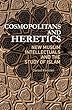
This also corresponds to the points of departure of Hanafi's own lifelong mission for defining and establishing an Islamic way of progressive thinking. Known as the Heritage and Renewal Project, the evolution of this project is discussed in great detail in my book Cosmopolitans and Heretics. Where al-Afghani and Abduh represent the first and second phases of trailblazing and breaking ground for the development of an Islamic philosophical method, Hanafi sees himself as following in the footsteps of Muhammad Iqbal (1877-1938), taking up and implementing the final and third phase of this reform process which the poet and philosopher from British India had laid out in The Reconstruction of Religious Thought in Islam.

Throughout his career, Hanafi has oscillated between this philosophical project and more engaged writings on current affairs in the Arab world. In the interview, he brings up the hostility of many Arab regimes against religious activism, even if it is strictly intellectual. These state interventions are not helpful in moving the Arab world forward:
The aggressive banning of religion from the public sphere by the state, and the introduction of a kind of "State Islam", is not going to lead us out of this dilemma. The tension between religion and politics would remain even then
Religious reforms in the Muslim world will need to take place within their appropriate context and its own terms, because as Hanafi observes:
Islam actually has no structures like the Church. Neither the Sunni Al-Azhar University nor the International Union of Muslim Scholars functions as an authority for the whole of Islam. In my view, the only Islamic authority comes from open, unbiased, scholarly discourse. And this is why is it quite simply structurally impossible for Islam to undergo the same kind of reforms as other faiths
To read the full interview click here

For some earlier critical observations on the role of Muslim intellectuals such as Hanafi in the Arab uprisings, read the post of 31 July 2011.

Thursday, 12 June 2014

Exploring Critical islam: Muslims and their Religion in a Post-Islamist World


This article was released as part of the Singapore Middle East Papers series, published by the Middle East Institute at NUS
 
The term ‘critical Islam’ can mean a host of things and therefore needs to be qualified. Here it will be used to describe a strand of contemporary Muslim thinking arising  and developing both in parallel with–and in contrast to–what scholars of Islam from different academic disciplines refer to as the ‘Islamic Resurgence’ beginning in 1970s.The exponents of this other current are called turāthiyyūn, or ‘heritage thinkers’, because they do not take Islam as a narrowly defined and fixed set of doctrines and tenets, nor do they regard it as offering a set and concrete political model that works as a panacea against all the ills affecting Muslims and Muslim societies. Instead, they regard Islam as a civilizational concept with a rich legacy of religious, philosophical, and cultural expressions. This is not to imply that the advocates of political Islam, or Islamists, can’t be critical too. In fact, a case could be made that their views of the role of religion in human life refers to another meaning of ‘critical’; in the sense of considering it crucial or critically important to human felicity. However, rather than projecting Islam as an ideal, the heritage thinkers–depending on their disciplinary backgrounds–take religion as an idea or a social fact. 

The full text can be accessed by clicking on the image below

https://www.academia.edu/7341654/Critical_Islam_Muslims_and_their_Religion_in_a_Post-Islamist_World

Saturday, 20 April 2013

An intellectual History of the Contemporary Muslim World

An impressionist and anecdotal talk by yours truly about contemporary thinking in the Muslim World at Mahfil Ali Shi'a Ithna'ashari Community in Middlesex (SICM).

Tuesday, 22 January 2013

Critical Muslims: Cosmopolitans or Heretics?

I have managed to track down lengthy videos of two of the protagonists featured in Cosmopolitans and Heretics: the Egyptian philosopher Hasan Hanafi and the late Algerian-French historian of Islam Mohammed Arkoun. Unfortunately, there does not seem to exist a comparable audiovisual impression of the third intellectual featured in the book, Nurcholish Madjid. Instead, I have included a recording of the fifth Nurcholish Madjid Memorial Lecture, entitled 'Marx or Machiavelli: Towards quality Democracy in Indonesia and America' of 2011, delivered by the American political scientist and Indonesianist, R. William Liddle. The lecture was organized by the Center for the Study of Religion and Democracy (PUSAD) of the Paramadina Foundation in Jakarta, and hosted by Paramadina University.


Documentary on Hasan Hanafi
 
Former presidential adviser and head of the European Bank for Reconstruction and Development, Jacques Attali, talks to Mohammed Arkoun.

 Nurcholish Madjid Memorial Lecture by R. William Liddle

For further readings on these three Muslim thinkers, check out the recommendations below:

Saturday, 5 May 2012

Liberal heresy in the contemporary Islamic cosmopolis

A review of Cosmopolitans and Heretics by Sajjad Rizvi, Associate Professor of Islamic Intellectual History at the University of Exeter. Here are a few highlights:

The book under review is [...] an exercise in contemporary intellectual history. [...] Critically, it not only abandons an essentialist reading of religion as a timeless set of doctrines, practices and rituals, but also distances itself from postmodernist approaches to religion by holding onto the category of religion as a meaningful concept and signifier. 
[it] examines the role of three contemporary ‘liberal’ Muslim thinkers who stand outside the mainstream, who have a training in the traditional disciplines of the Islamic space of learning often called the madrasa (or at least have a familiarity with it), and who are not just influenced by but also express the traditions of intellectual fashion current in metropolitan academia and its study of religion. These three voices are Hasan Hanafi, the late Nurcholish Madjid and the late Mohammed Arkoun.
 Kersten’s argument is partly that unlike the earlier generation of colonial, modernists who were simply concerned with making Islam ‘relevant’ to the contemporary world through the adoption of modern ideologies, institutions and practices, this generation of thinkers expresses not only a distrust of the possibilities of modernist commensurability but also of the ‘fundamentalist’ quest for authentic being through an atavistic and ahistorical ‘return’ to the pristine, early generation of Muslims, al-salaf al-ṣāliḥ. 
...the book offers an excellent corrective to the Middle East focused bias of Islamic studies and is a strong advocate for a serious study of South East Asian studies. It is refreshing to see a ‘view from the edge’, especially given the demographic and institutional significance of Indonesia.
Read the full article on Rizvi's MullaSadra blog: Hikmat: Liberal heresy in the contemporary Islamic cosmopolis.

Sunday, 30 October 2011

Where are the Arab Intellectuals?

In his news analysis of 29 October 2011 published in the Sunday Review section, New York Times staff writer Robert F. Worth examines the relative silence of intellectuals from the Arab World during this year's 'Arab Spring'. It looks at the disappointment of Syrians due to the absence of any bold challenges by the famous poet Adonis in his open letter to Syrian President Asad.
Syrian-Lebanese poet Adonis
This makes Arab intellectuals look meek in comparison to their European, Asian and American intellectual predecessors like Vaclav Havel, Mao, and Thomas Paine. According to Worth it reflects the climate of repression under which many intellectuals in the Arab world live and work, but it is also symptomatic of the post-ideological era in which we live with much less room for 'unifying doctrines' and 'grandiose figures'. 


Syrian philosopher Sadiq Jalal al-Azm
Worth continues: 'To some extent the intellectual silence of the current uprising is a deliberate response to the revolutionary rhetoric of previous generations... [...] The protesters who led the Arab Spring had grown tired of the stale internationalist rhetoric of their forebears'. There is a perceptible shift from ideological grandstanding to a more realistic and pragmatic concern with human rights and democratization. Thinkers such as the Syrian philosopher Sadik Jalal al-Azm joined other Syrian intellectuals to sign the 'Declaration of the 99'.  But then again:
But in recent years their voices often went unheard, because their secular language had little resonance in societies where political Islamic was becoming a dominant force. nor did Islamic reformers fare much better when they tried to cast their political critique in religious terms. The Egyptian scholar Hassan Hanafi, for instrance, in the 1980s began calling for the creation of an "Islamic Left", a socialist ideology rooted in religion. He was branded a heretic and had to seek police protection after receiving death threats from jihadists. His work gained an audience in Indonesia, but not in his own country, said Carool Kersten, a lecturer at King's College London who has written on Islamic reformers. 
It appears intellectuals throughout the Arab world are struggling to find a way for giving voice to the frustrations, ambitions and expectations of its citizens. To read the full essay click here.


* those who read Arabic click on this link.

Thursday, 15 September 2011

Refashioning the Study of Islam: Muslim contributions


Kristian Petersen, the new host of the Islamic Studies and Religion section of New Books Network (NBN) interviewed this blogger about the contributions of three Muslim intellectuals to finding new approaches to the study of Islam. The talk is based on the book Cosmopolitans and Heretics examinations of the writings of Indonesian Islamicist and public intellectual Nurcholish Madjid, the Egyptian philosopher Hasan Hanafi, and the French-Algerian historian of Islam Mohammed Arkoun.
Often when we read about new Muslim intellectuals we are offered a presentation of their politicized Islamic teachings and radical interpretations of theology, or Western readings that nominally reflect the Islamic tradition. We are rarely introduced to critical Muslim thinkers who neither abandon their Islamic civilizational heritage nor adopt, wholesale, a Western intellectual perspective.
Click here to listen to the whole interview. And the the image below to buy the book.

Saturday, 30 July 2011

The Arab Spring: Intellectual Underpinnings

The newly launched  Fair Observer Website has published an essay by yours truly on the intellectual discourses underlying the current social volatility and changes in the political landscape in North Africa and the Middle East.
 the outside world appears to be realizing that the region’s future is not limited to a choice between authoritarian strong-man regimes providing a precarious stability, or the uncertainties associated with an Islamist take-over. But what is still missing in analyses of these peoples’ revolutions - driven by rising Arab middle classes - is how political pluralism depends on intellectual opennessThis is not only because policy makers, political pundits and other Middle East watchers focus primarily on the antagonism between existing regimes and their Islamist detractors. 
The article showcases Egyptian philosopher Hasan Hanafi as an example of  what Mohammed Arkoun called the chercheur-penseur or 'scholar-thinker', whose contributions to a rethinking of Islam as a civilizational legacy were considered suspect by the political elites and controversial by the religious establishment and Islamists.
Hasan Hanafi
A former Muslim Brotherhood sympathizer, by 1960 Hanafi had already moved away from the Islamist agenda, focusing instead on the potential of Islam’s wider intellectual legacy for the emancipation of not just the Middle East but the Third World in general, from regressing into a theocracy.  Hanafi was no stranger to controversy. Because of his revolutionary reinterpretation of Islamic thinking along the lines of Latin American liberation theology, he had been in trouble with both Egypt’s state security apparatus and the Islamists before.  
The ‘Heritage and Renewal’ Project which he has been developing for the last thirty years envisages a new way of thinking for citizens of Egypt, the Muslim world, and eventually the entire Developing World, by critically examining the failings of their heritage as well as the shortcomings of the West.  Unfortunately for Hanafi, it caused not only suspicion among the state authorities, but his criticisms of atrophied traditional Islamic learning and rejection of the Muslim Brotherhood slogan ‘Islam is the Solution’ also caught the ire of the Azhar establishment and the Islamists.
However, it appears that these progressive ideas are now finally percolating through to the growing middle classes of increasingly better educated and critical young Egyptians and Muslims elsewhere.
 Amr Hamzawy, a political analyst with the Carnegie Endowment whose name briefly circulated as the new minister of youth after Mubarak’s fall, used the Islamist attacks on Hanafi to illustrate Egypt’s lack of intellectual freedom.
Amr Hamzawy
 Only now, in the wake of the February 25th revolution, is there a chance for the openness Hanafi has advocated for decades. In an article for al-Arabi Weekly, entitled ‘The Awakening of the Giant’, he  noted that: “The people broke the barrier of fear. They jumped forward along the historical path.” 
It seems that the Arabic-speaking parts of the Muslim world are catching up with other countries, where the space for lively intellectual debate has been less constricted:
Ironically, many of these thinkers have found more receptive audiences elsewhere in the Muslim world, in particular in Indonesia and Turkey [..]It is interesting to note how Indonesia and Turkey, two countries careful to avoid any direct reference to Islam in their constitutions, also appear to be the most open to lively debates on the place of religion in public life. This intellectual vibrancy is a crucial factor in the remarkable political transformations of the most populous Muslim nation-state in the world and the largest Muslim country in the Mediterranean. Indonesia and Turkey, too, suffered under military dictatorship while witnessing an increased display of personal Muslim piety. However, this is no longer pursued through political Islamic doctrines. Instead it has been translated into an agenda advocating economic development, universal standards of human rights, and democracy compatible with a moral compass based on Islamic values.
Hasan Hanafi in Indonesia
The read the full article, click here

Saturday, 28 May 2011

Mohammed Aziz Lahbabi and the 'anthropological turn' in Muslim thinking

This week's edition of  Qantara, the Germany-based website covering current political, cultural and intellectual affairs in the Muslim world draws attention to the work of the Moroccan philosopher and poet Mohammed Aziz Lahbabi (1923-1993) and the latter's important contributions he has made to developing an Islamic-philosophical anthropology through his 'Muslim personalism'.


Mohammed Aziz Lahbabi (1923-1993)
 The German theologian and philosopher, Pastor Dr Markus Kneer, has recently published an annoted German translation of Lahbabi's Le Personnalisme Musulman under the title Der Mensch: Zeuge Gottes: Entwurf eine islamischen Anthropology. In an interview he discusses some aspects of Lahbabi's work. Motivated to find a new way of engaging in Muslim-Christian dialogue, Kneer was looking for a Muslim thinker who could be presented with reference to Western anthropologies:
It seemed to me that localising what is to a great extent a Christian and Occidental concept of the individual within a Muslim context harboured the potential for a dialogue on the Christian and Islamic images of man – potential that should by all means be tapped. Lahbabi's "Muslim personalism" consists of just such an articulation of the human individual from Islamic sources. His points of reference in European philosophy are the personalism of Emmanuel Mounier (1905–1950) and Jean Lacroix (1900–1986) as well as the life philosophy of Henri Bergson (1859–1941).
Admitting that Lahbabi's ideas are very much grounded in the intellectual climate of the 1950s and 1960s, Kneer argues that, against the dramatic changes in the political landscape in North Africa, the time is ripe for a new appreciation of some of the ideas that had come to fruition in that time frame:
Today, personalism has largely been replaced by other discourses. Nevertheless, contemplation of the human as person is more intense today than in past decades, and what Paul Ricœur already predicted thirty years ago now seems to be coming true: "Personalism will die, but the person will return!" 
This concept after all bundles together other values that are of great importance for the articulation and ethical analysis of human life: e.g. dignity, freedom, responsibility. And I think it's no accident that in recent official publications of the Arab League on the subject of human rights the Arabic equivalent of person, "shakhs", frequently appears.
Although two generations have passed since North Africa shook off the yoke of political imperialism, the Muslim world's intellectual emancipation has only been partially realized. Recently, its progress has been obstructed by the positing of unhelpful theses, such as Francis Fukuyama's 'The End of History', and dangerous polarizing ideological paradigms for a new post-Cold War world order, like the 'Clash of Civilizations', advocated by the likes of Samuel Huntington. It seems in many parts of the Muslim world the time is ripe for challenging these remnants of Western hegemonism, thus giving new currency to the ideas Lahbabi developed a few decades ago. As Kneer explains: 
The historical and practical reasons why Lahbabi chose to analyse the process of becoming a person can be found in the identity crisis experienced by the colonised populace during the colonial era – in particular by the intellectuals. Lahbabi described how the colonial system had depersonalising effects for him and many others. Instead of experiencing language, communication and mental life as fields for personalisation, his generation suffered from speechlessness, non-communication and a feeling of inner emptiness. He wondered for a long time whether he was a person equal to the others, in other words, to the Europeans. The role of the Other in becoming a person and a human is thus not unproblematic.
The awareness of this philosophical problem is also reflected in Lahbabi's stance towards the place of reason in human thinking and how this can be accommodated within a Muslim Personalist philosophy:
Lahbabi is not talking about an absolute reason of the word, divorced from the religious context, but rather a reason that illuminates and lends dynamics to this context. In other words, ijtihad, the term used in Islamic theology to describe the personal and rational adoption of faith, must be rehabilitated as the fundamental method of theological work. Lahbabi's profound criticism of taqlid, the blind mimicking of and adherence to opinions passed down by the great Muslim scholarly authorities, is connected with this stance. Only shahada (profession of the one and only God, the Muslim creed) that reflects true ijtihad has personalising value, says Lahbabi.
With his dynamic concept of reason, Lahbabi takes up a position within value hermeneutics that mediates between the cultural and religious sources of values and their universal validity. In the process of transcending the bounds of the self, culturally inflected values become understandable against the horizon of other value traditions, and their universality can be tested. One-sided culturalism or universalism is not possible with Lahbabi.
Read the full article by clicking here.
Dr Marien van den Boom
Kneer is not the first Western scholar to draw attention to Lahbabi's thought. In 1984, the Dutch scholar Marien van den Boom published a PhD thesis in which he juxtaposes Lahbabi with the Egyptian philosopher Hasan Hanafi. Written in Dutch, De Bevrijding van de Mens in Islamitisch Perspektief (The Liberation of Man from an Islamic Perspective) unfortunately went largely unnoticed. To my knowledge, it was -- and still is -- the only detailed examination of the anthropological turn by two Muslim philosophers, who are not only united by this anthropocentric focus, but also by their ambition to develop a kind of Islamic liberation theology as a contribution to the liberation of the entire 'Third World'.

Of course, other thinkers from the Muslim world, such as Hichem Djait, Mohammed Arkoun, and -- in Indonesia -- Nurcholish Madjid have also developed personalist and humanist ways of thinking, drawing on concepts such as Kardiner's 'basic personality structure' or advocating new epistemologies that make a clear distinction between theological and anthropological approaches to the study of religious phenomena. For a more detailed discussion of the contributions of Arkoun, Hanafi and Madjid to these debates, see my Cosmopolitans and Heretics, which has just been released by Columbia University Press.